Prop firm training with a mentor: What really changes in 2026
Free strategies on YouTube, prop firm rules published in open access, forums filled with tips: information has never been easier to find. Yet, a large number of candidates fail their first trading challenge, and many fail several times in a row. The problem is almost never a lack of knowledge: it is the absence of someone to sort through this knowledge, put it in the right order, and correct your mistakes the moment they happen. That is exactly what prop firm training with a mentor provides: one-on-one guidance that transforms an accumulation of scattered knowledge into a verifiable trading process. Here is what it changes in concrete terms, what it costs, and how to choose the right program in 2026.
Why self-teaching quickly reaches its limits
Learning on your own is not impossible: some traders eventually succeed after years of trial, error, and lost accounts. But the self-taught path almost always follows the same trajectory, and that trajectory is expensive.
The real problem: too much information, no order
A beginner learning alone consumes dozens of contradictory sources. One video recommends scalping indices, another suggests swing trading the euro-dollar, and a news feed swears by breakout moves on gold. Without a framework, each new approach replaces the previous one, and none is ever practiced long enough to be validated. The mentor begins with this sorting process: one market, one time slot, one type of setup, until the action is mastered. It is counter-intuitive, but narrowing the scope of learning is the first step toward acceleration.
No one to correct your mistakes in real time
As a self-taught trader, you only discover your mistakes after you have paid for them. A stop that is too wide becomes a drawdown violation; revenge trading after a loss leads to an account reset; a poorly calibrated lot turns a decent trade into a breach of the daily loss limit. With a mentor, these errors are identified in your trading journal during the session, before they cost you a challenge. This is the difference between paying to learn and paying to make repairs.
What a mentor prioritizes for correction
Serious mentorship does not promise returns: it repairs the process. In practice, the priority areas are almost always the same, and none of them are spectacular.
Risk management comes first: calibrating position size based on account size and stop distance, defining a maximum daily loss, and understanding the firm's drawdown (daily, balance-based, or equity-based) before validating a single transaction. Next comes psychology: knowing when to step back after a bad day, stopping once the target is reached, and accepting days without trades. Finally, journaling: every entry documented, every screenshot commented on, and every statistic tracked week after week. These are simple actions that almost no one can maintain alone for more than a month. The presence of a mentor turns these actions into a non-negotiable routine.
Individualized guidance also has an often-underestimated virtue: it adapts everything to your actual constraints. A trader employed from 9 a.m. to 6 p.m. cannot follow the same sessions as a student available in the afternoon, and a news-based strategy is not suitable for someone who only looks at the markets in the evening. The mentor adjusts the market, the schedule, and the style to your timetable, making the plan sustainable for months, not days.
With a mentor vs. self-taught: an honest comparison
Here is what the two paths yield on the criteria that truly matter when aiming for a funded account:
<| Criterion | Self-taught | Prop firm training with a mentor |
|---|---|---|
| Access to information | Abundant but scattered, often contradictory | Sorted and organized into a progressive program |
| Error correction | After paying for them (resets, lost accounts) | Identified in the journal before the next challenge |
| Rhythm and consistency | Often abandoned after a few weeks | Follow-up, reminders, and regular check-ins |
| Risk management | Learned through account resets | Calibrated from the first few weeks |
| Customization | Generic: the same videos for all profiles | Adjusted to your level, your market, and your schedule |
| Budget | Appears free, costly in resets | From 990 € to 3 490 €, known in advance |
The table does not claim that self-teaching is doomed to failure. It states that it shifts the entire cost of learning onto failed challenges, whereas coaching concentrates it into a controlled budget, decided only once.
What a prop firm course with a mentor actually contains
Every organization structures its coaching in its own way, but a serious program always rests on three pillars.
A structured program, not a catalog of videos
The foundation is a week-by-week curriculum: market fundamentals, risk management, identifying setups, and then direct preparation for the challenge with the firm's real rules (profit targets, drawdown, minimum trading days). This sequencing matters more than the volume of content: it is what prevents skipping steps. If you are starting from scratch, our article on where to start a prop firm course details the first few weeks, and a program such as 8 weeks before a first challenge shows what a realistic skill progression looks like.
The review of your trades
This is the heart of the coaching, and what no video can replace. You send your screenshots and your journal, and the mentor explains why that entry was not valid, why that stop was too optimistic, or why that day should have remained a no-trade day. The most costly beginner mistakes are rarely complex: they are repetitive, and an outside perspective eliminates them in a few weeks. This is the entire subject of our article on beginner mistakes in a prop firm course.
Regular individual check-ins
Every week or every two weeks, a video call takes stock of the situation: statistics, adherence to the plan, sticking points, and trading plan adjustments. This meeting prevents you from quitting in week 3 and keeps you on track when motivation wanes. A mentor is not a guru: they are the project manager of your progress.
What budget to expect and how to choose
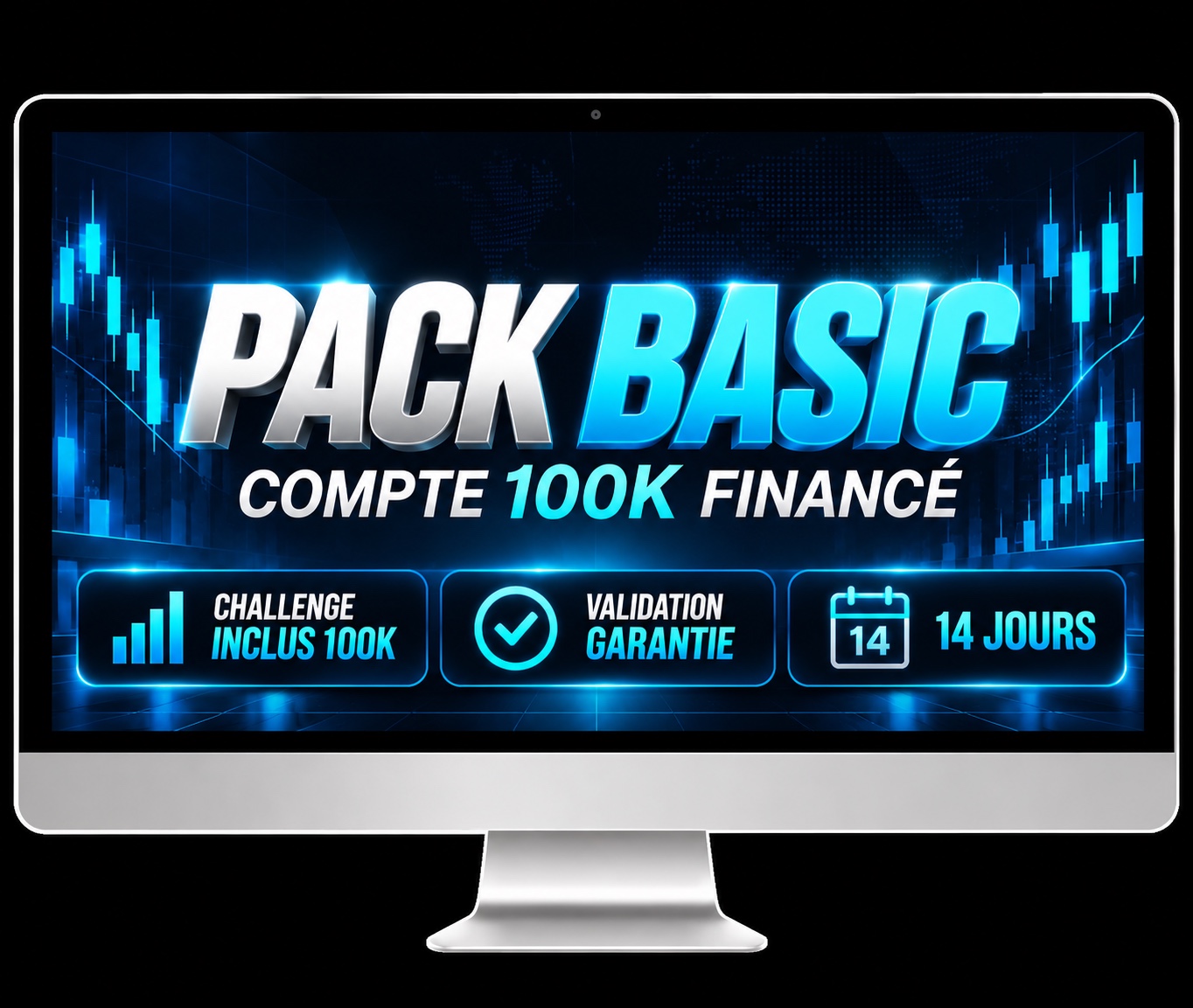
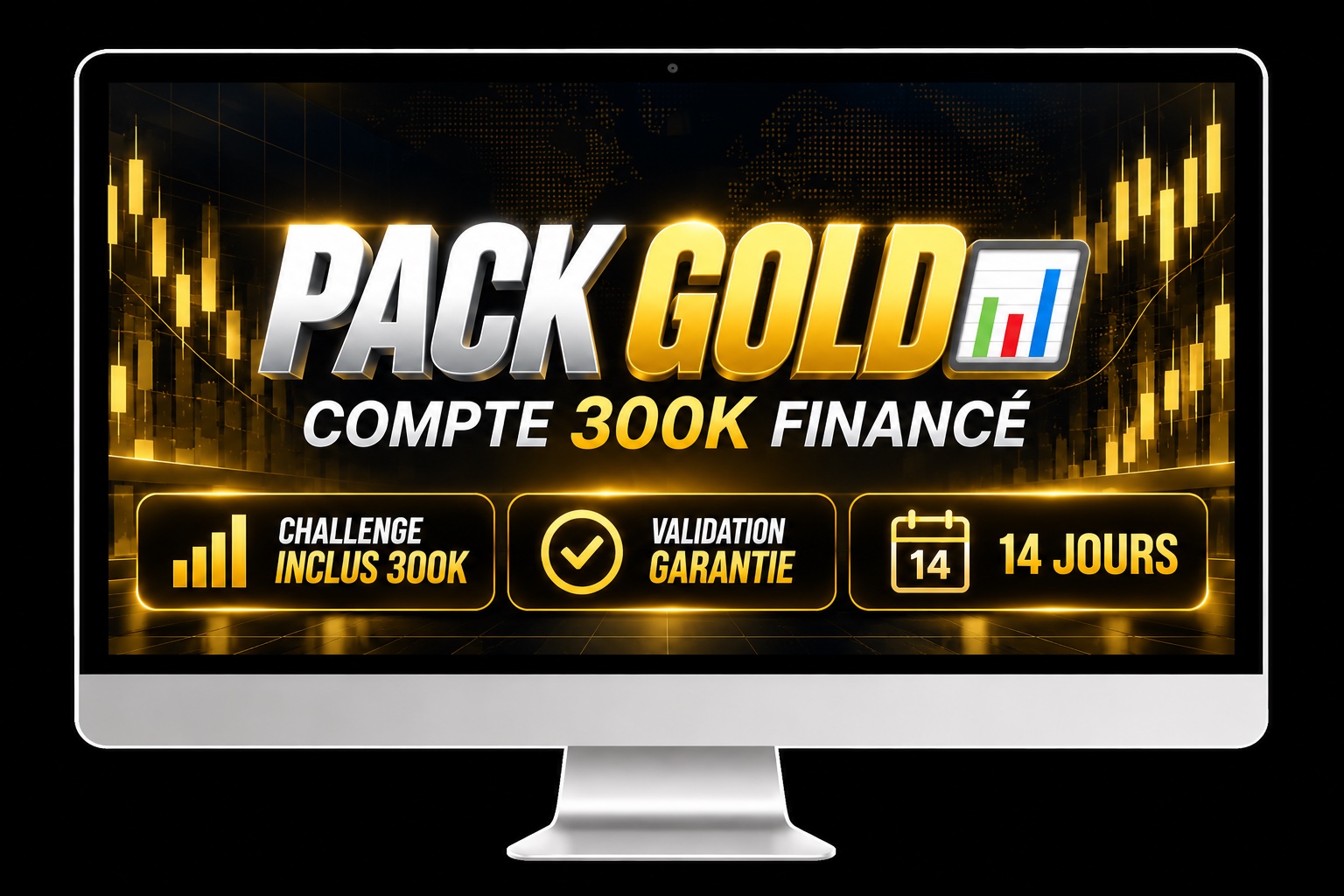
On Fundedtrader.fr, packs are scaled according to the intensity of the coaching: the Basic Pack at 990 € covers the fundamentals and prepares you for the challenge, the Gold Pack at 1 690 € adds close, long-term support, and the Elite Pack at 3 490 € includes the most comprehensive individual follow-up, with trade reviews and support through your first payout. The detailed content of each plan is on the courses page, and our coaching approach is presented on the mentorship prop firm.
Four criteria to identify a serious mentor
Whether you choose our programs or another organization, apply these four filters. One: they talk about processes and rules, never about promises of gains. Two: they require a trading journal from day one, because a mentor who doesn't look at your trades cannot correct you. Three: their results are verifiable or, at the very least, they show real accounts with a trading history. Four: their program covers drawdowns, psychology, and prop firm rules, not just entry strategies. Support that fails to meet any of these four criteria is just a video subscription, not mentorship.
Does everyone need a mentor?
No, and it is important to state this clearly. If you already have a validated process, a journal kept over several months, and successful challenges, a mentor will primarily provide refinement, and the price of a premium pack will be hard to justify. However, if you are going through constant resets without understanding why, if you change your strategy every month, or if you don't even know which drawdown your firm applies, guidance is not a luxury: it is the fastest path to a funded account.
There is also an intermediate path: starting for free to test your consistency. Our 90-day plan to learn trading for free allows you to measure your diligence before investing a single euro. If you keep up the pace for three months, training with a mentor will amplify momentum that is already there; if you give up in two weeks, you will have saved 990 €.
Conclusion: invest in guidance, not in a promise
A prop firm training program with a mentor does not buy you a funded account: it buys you time, avoids errors, and provides a verifiable process. Between a 990 to 3 490 € pack and a series of resets at 100 or 200 € each, the math adds up quickly as soon as you count the failed challenges. The real question is therefore not "how much does a mentor cost?" but "how much does the absence of a mentor cost me?". It is up to you to answer that with your trading journal.
Ready to structure your progress? Discover our training programs, compare our Basic, Gold, and Elite packs, and then, when your trading plan is ready, choose your first trading challenge.