Translate

What is a professional trader?
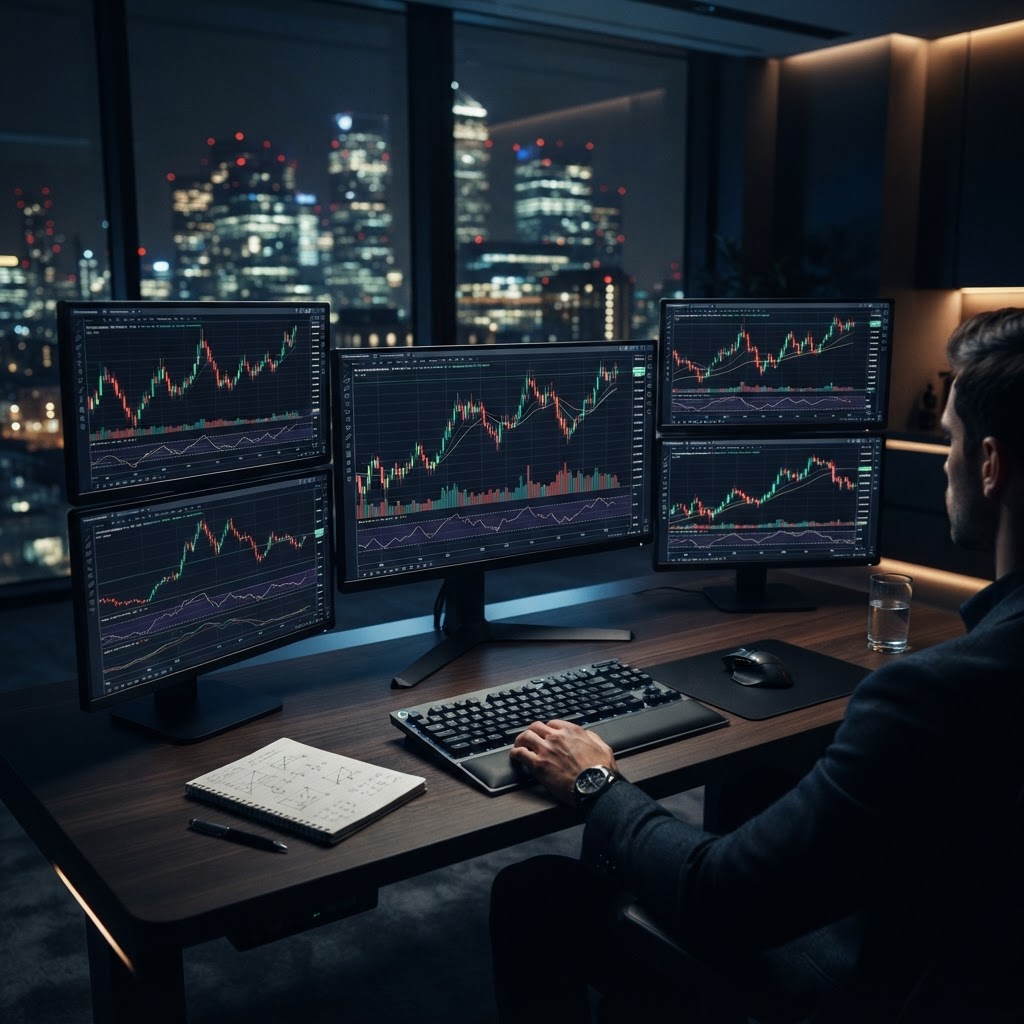
Becoming a professional trader in France means making a living from trading, sustainably and consistently, rather than relying on one-off opportunities. The distinction between a trader and an amateur lies in the regularity of results, work organization, and, where applicable, formal business status. Very often, the transition to professionalism also involves making organizational and tax-related choices.
Choose a suitable status
Once you are able to make a living from trading, several paths exist:
- Proprietary trading: you trade with your own funds. No specific legal status is required for speculative activity, but you must declare your capital gains to the tax authorities.
- Self-employed or company: useful if you develop a training, consulting or management activity alongside trading.
- Third-party asset management: heavily regulated in France; it requires the status of a financial investment advisor (CIF) or access to a regulated framework. It should be avoided without guidance.
Taxation of traders in France
Trading gains are taxed as capital gains on the sale of securities (a flat tax of 30% in 2026 based on the standard tax brackets, unless otherwise opted). Registering your business as a company changes the nature of the taxation. Our guide to taxation for a property firm details the key points to consider. If in doubt, consulting a chartered accountant remains essential.
Training to become a professional
This professional is distinguished by the depth of their training and the rigor of their processes. This requires a solid mastery of charting , indicators, but above all, risk management and psychology. Our training programs are designed to structure this career path.
Start with prop firms
Pour beaucoup de traders professionnels en devenir, les prop firms représentent un terrain d'entraînement idéal : on y apprend à respecter des règles strictes de risque, on y gère un capital significatif, on y mesure l'écart entre l'intention et l'exécution. Pour aller plus loin, notre guide dédié complète cette démarche.
Construire une organisation de travail
- Un bureau dédié, sans distraction.
- Des horaires fixes centrés sur une ou deux sessions.
- Un journal de trading tenu quotidiennement.
- Une revue hebdomadaire et mensuelle des résultats.
- Une réserve de trésorerie séparée du capital de trading.
Conclusion
Devenir trader professionnel en France n'est pas une question de chance, mais d'organisation, de régularité et de cadre. Avec un bon statut, une formation solide et une discipline de gestion du risque, l'activité peut devenir durable. Le secret n'est jamais dans un trade gagnant : il est dans la reproductibilité.
Cet article a un objectif éducatif uniquement et ne constitue pas un conseil en investissement. Le trading comporte un risque de perte en capital. Les performances passées ne garantissent pas les résultats futurs.