Translate
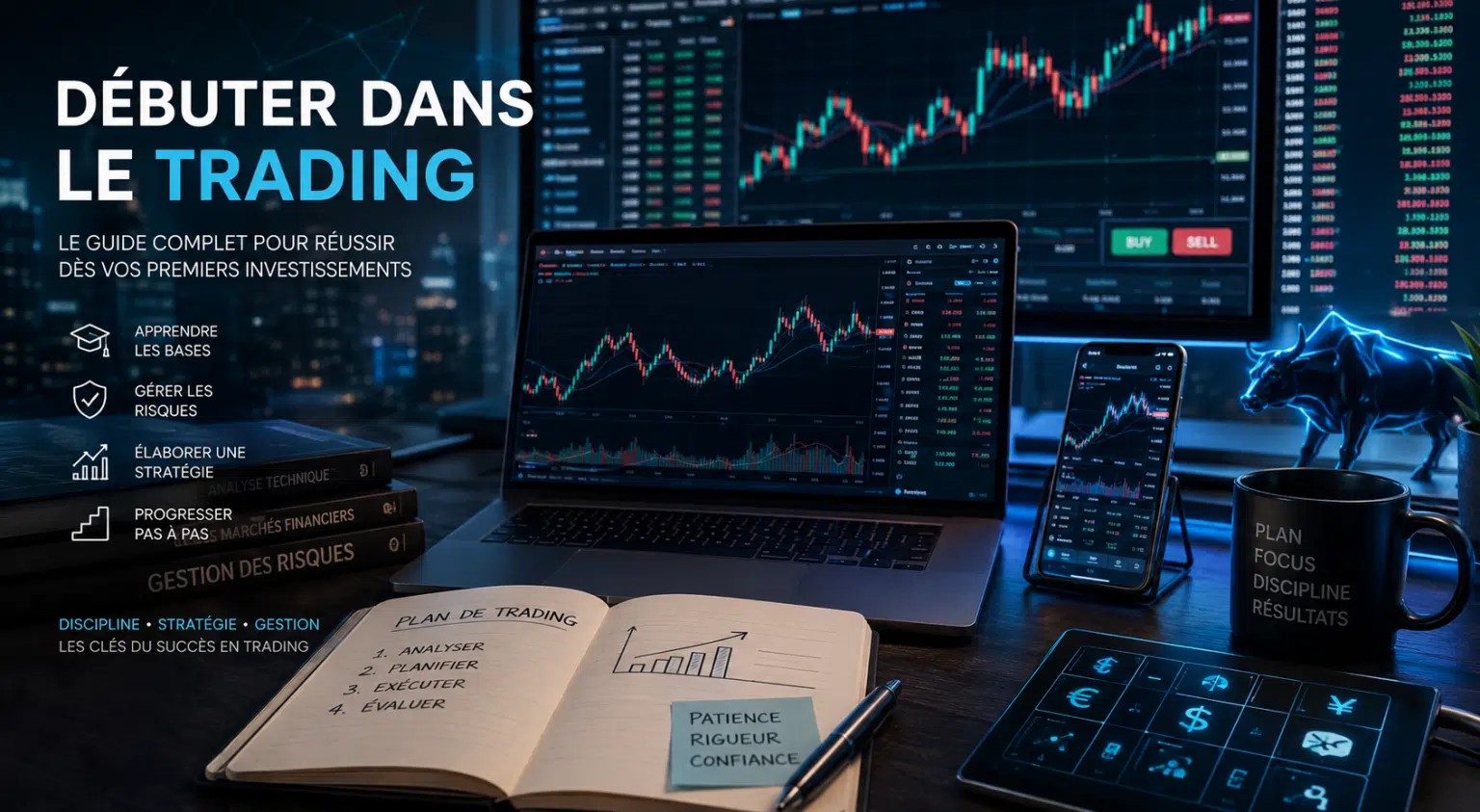
Understanding what trading really is
Getting started in trading begins with a clear definition: trading consists of buying and selling financial assets to generate a profit, over time horizons ranging from a few minutes to several days. Unlike long-term investing, traders aim to capitalize on price movements, not to hold assets for years. This difference has direct consequences for the time, risk, and organization required.
Choosing your market
- Forex: the currency market, liquid and accessible 24 hours a day on weekdays.
- Indices: such as the DAX or the S&P 500, which reflect the performance of baskets of stocks.
- Raw materials: gold, oil, metals, which are sensitive to economic cycles.
- Cryptocurrencies: highly volatile, designed for short-term trading.
Learn analysis before you trade
Before taking any real position, it is necessary to understand the two main points:
- Technical analysis : trends, support and resistance levels, Japanese candlesticks, indicators such as moving averages or RSI .
- Fundamental analysis : economic calendar, central bank announcements, macroeconomic publications.
Practice on a demo account
A demo account isn't optional; it's essential. It allows you to test your strategy without risking your capital and to learn the platform. Keep it open for at least two to three months, until you achieve consistent results. However, be wary of demo accounts that are too long, as they don't replicate the pressure of real trading.
Build a trading plan
A trading plan is a written document that outlines your entry and exit rules, maximum position size, and trading schedule. Without a plan, you trade based on whims; with a plan, you trade by rules. It's the most valuable asset for a beginner trader.
Manage risk from the very first trade
La règle d'or : ne risquez jamais plus d'un petit pourcentage de votre capital par trade. Le risk management est ce qui vous maintient en vie le temps que votre edge se manifeste statistiquement. Un bon trader n'est pas celui qui gagne le plus, mais celui qui perd le moins quand il perd.
Conclusion
Débuter dans le trading avec méthode, c'est mettre toutes les chances de votre côté sans céder à la précipitation. Apprenez, pratiquez en démo, écrivez votre plan, gérez votre risque : sur ce socle, votre progression sera réelle et durable.
Cet article a un objectif éducatif uniquement et ne constitue pas un conseil en investissement. Le trading comporte un risque de perte en capital. Les performances passées ne garantissent pas les résultats futurs.